


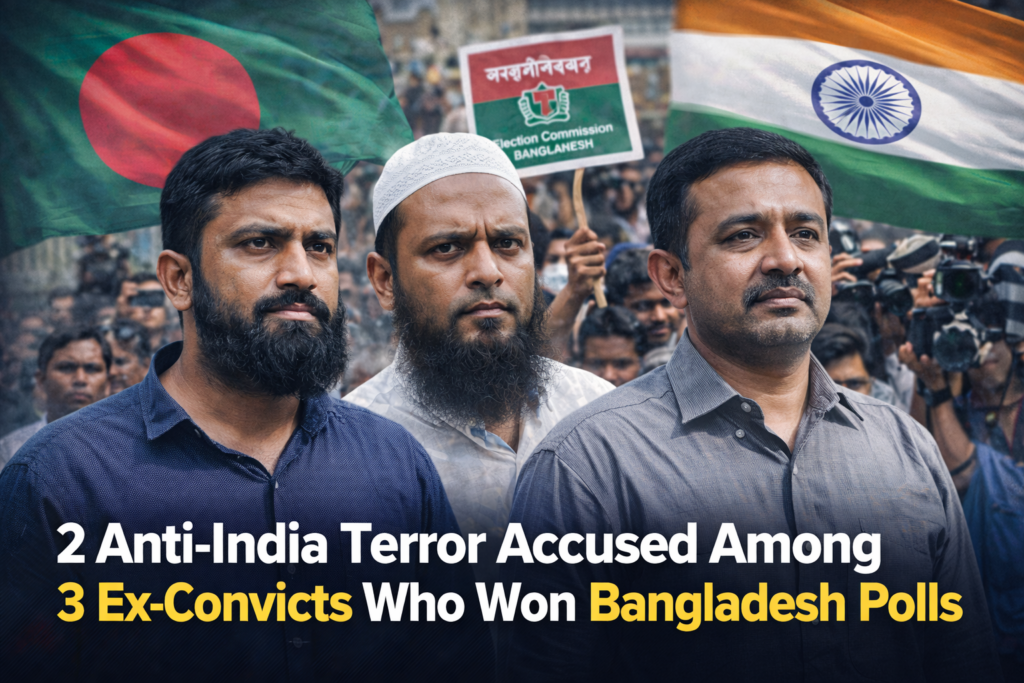
In a controversial political development, three former convicts, including two individuals previously accused in anti-India terror-related cases, have reportedly won recent local elections in Bangladesh. The election outcome has sparked debate among political analysts, security observers, and regional experts, raising questions about democratic eligibility, legal rehabilitation, and national security concerns.
According to local reports and election officials, the three candidates had previously been convicted in separate cases. Two of them were earlier accused in cases linked to extremist or anti-India activities, while the third candidate was convicted in a different criminal matter. All three individuals had completed their sentences and were no longer legally disqualified from participating in elections under Bangladesh’s electoral laws.
Legal Eligibility and Democratic Process
Under Bangladesh’s legal system, individuals who have served their prison sentences and fulfilled the legal conditions are eligible to re-enter public life, including participating in elections. Election authorities confirmed that the candidates met the eligibility criteria and were allowed to contest the polls.
Election officials emphasized that their responsibility is to ensure candidates meet the legal requirements, and once cleared, voters have the final authority to decide the outcome.
Political experts note that this reflects a fundamental principle of democracy, where legal eligibility and public support determine electoral success.
“Democratic systems operate on the rule of law. If a person has served their sentence and is legally eligible, they cannot be barred from contesting elections,” a political analyst stated.
Background and Security Concerns
The presence of individuals previously accused in anti-India terror-related cases in the political process has drawn attention from security observers. While these cases are part of their past legal records, experts say such developments naturally attract scrutiny due to the sensitive nature of regional security.
Security analysts point out that Bangladesh has made significant progress over the past decade in strengthening its counter-terrorism framework and improving internal security. The country has worked closely with regional and international partners to address extremist threats and enhance law enforcement capabilities.
However, the election of former convicts, particularly those linked to sensitive cases, may lead to renewed discussions about balancing democratic rights with public safety and national security.
Public Mandate and Political Impact
The election results also highlight the role of public perception and voter choice. In democratic systems, voters ultimately decide who represents them, regardless of a candidate’s past, as long as the individual is legally eligible.
Political observers believe the outcome reflects local political dynamics and voter priorities, which can vary depending on social, economic, and regional factors.
“This result shows that voters consider multiple factors, including local influence, public image, and political connections,” said a regional political expert.
The development may also have broader political implications, as it could influence discussions around electoral reforms, candidate eligibility, and rehabilitation policies in democratic societies.
Regional and International Attention
The situation has attracted attention from regional observers due to the historical and geopolitical relationship between Bangladesh and India. While no immediate official response has been issued from Indian authorities at the time of reporting, experts say such developments are closely monitored in the context of regional stability and diplomatic relations.
Bangladesh and India share strong diplomatic, economic, and security ties, and both countries have cooperated extensively in addressing cross-border security challenges.
Experts emphasize that isolated political developments do not necessarily reflect broader government policies but may still generate political and public discussion.
Conclusion
The victory of three former convicts, including two previously accused in anti-India terror-related cases, represents a complex and sensitive moment in Bangladesh’s political landscape. While the candidates were legally eligible to contest and were elected through a democratic process, the development has raised important questions about rehabilitation, electoral eligibility, and security considerations.
As Bangladesh continues to strengthen its democratic institutions and security systems, such developments highlight the ongoing balance between legal rights, public mandate, and national security concerns.