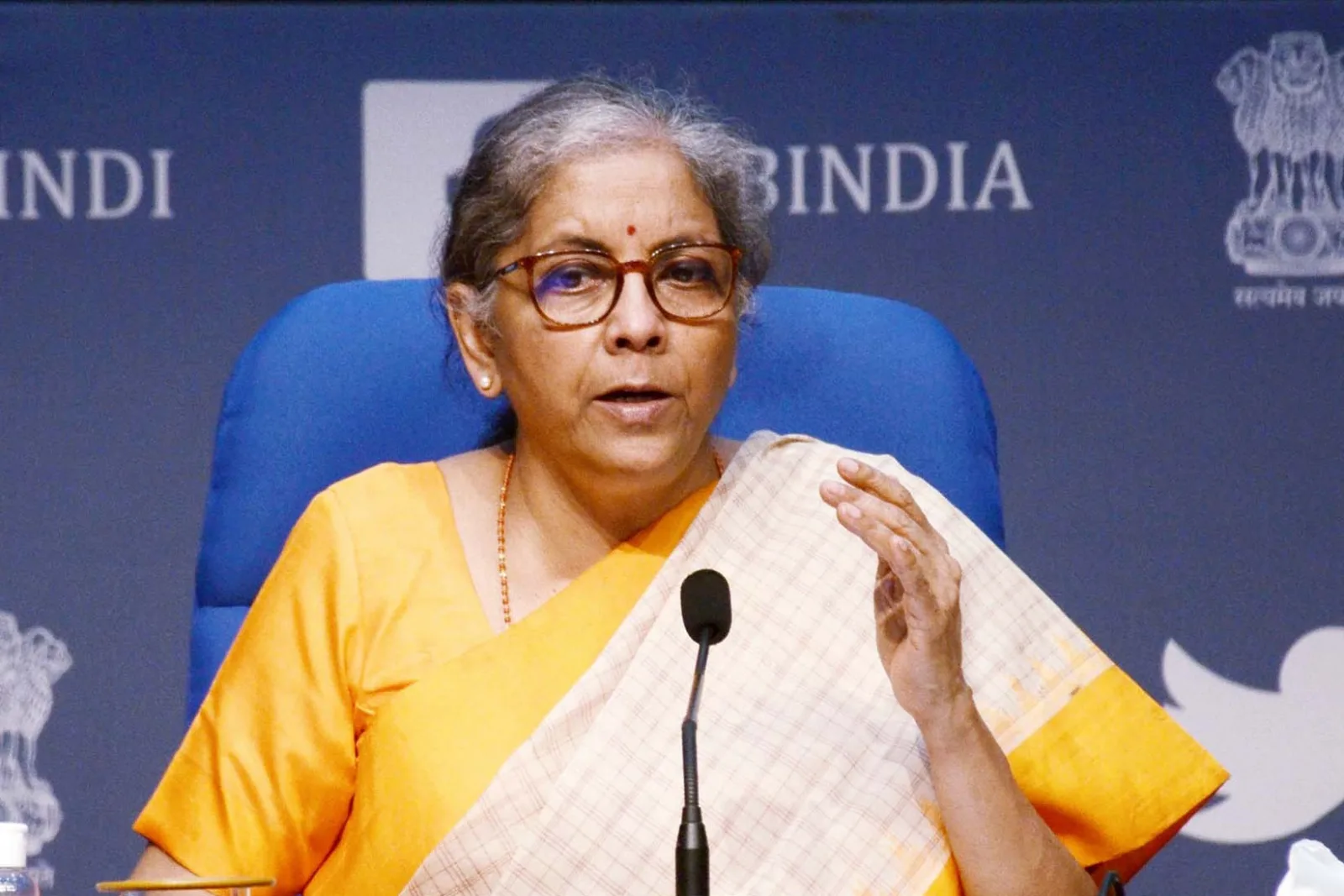
CHENNAI: Finance Minister Nirmala Sitharaman said on Saturday that India can grow at more than 10 per cent a year if it puts technology and innovation to work across the economy, setting out an ambition well above any current forecast for the country.
“India can achieve economic growth of more than 10 per cent by leveraging technology and innovation across sectors,” Sitharaman said at a fireside chat organised by the IIT Madras Alumni Association, tying the goal to the government's plan for a developed India, or Viksit Bharat, by 2047.
The remark lands in a week when the official outlook moved up, but only to about 7 per cent. The Asian Development Bank and S&P Global both raised their forecasts for India's growth in 2026-27 to 7 per cent from 6.6 per cent, after the economy expanded 7.8 per cent in the April–June quarter.
Much of Sitharaman's argument rested on agriculture, the sector that employs more Indians than any other but where output per worker remains low.
She pointed to the use of drones and aerial geospatial technology to map land parcels precisely, work that feeds into land records and farm planning. She also cited point-of-sale machines at fertiliser distribution centres, which record a farmer's details and the condition of the soil so that the quantity of fertiliser supplied can be matched to what the land actually needs.
Both touch long-running problems in Indian farming: disputed or outdated land records, and the heavy use of subsidised fertiliser.
According to an account of the session published by IndiaIPO, she also identified artificial intelligence, semiconductors and quantum computing as areas where investment in infrastructure could lift productivity across the economy.
Her strongest example was digital payments. UPI is now operational in 11 countries, including France, Singapore, the UAE, Greece and Mauritius, she said. The number of payment points that accept UPI has grown roughly 260 times since 2018, and one of every two real-time digital payment transactions in the world now takes place in India.
At the Sangam 2026 conference, the minister also released Cashless Nation: How UPI Changed Everything, a book by Dr Santanu Paul and B Sambamurthy that traces how the payments network was built.
The example comes as UPI faces its biggest policy change in years. From October 15, merchants will pay a 0.4 per cent merchant discount rate on UPI payments above ₹2,000, ending a period of nearly six years in which merchant payments on the network carried no fee. The National Payments Corporation of India has said 96 per cent of UPI transactions fall below that threshold.
Moving from about 7 per cent to more than 10 per cent would require a lasting rise in productivity rather than a single good year. The minister's case is that the rise has to come from wider use of technology: farms that apply inputs more precisely, businesses that run on digital payments and data, and investment in frontier industries.
The near-term backdrop is less forgiving. Brent crude has hovered around $100 a barrel for much of September because of the conflict involving the US and Iran. Foreign portfolio investors pulled ₹13,138 crore out of Indian shares in the first half of the month, and the stock market has been weak for most of the year.
The ADB, in raising its forecast, said the economy had so far been cushioned by smaller-than-expected supply disruptions, continued capital inflows and limited pass-through of higher input costs to consumer prices, with infrastructure spending and supportive fiscal and monetary policy helping to sustain growth. It also lowered its inflation forecast for 2026-27 to 5 per cent from 5.2 per cent.
The Reserve Bank of India's Monetary Policy Committee meets from October 5 to 7. The next official estimate of growth, for the July–September quarter, is due at the end of November and will show whether the economy has held its pace through a quarter of expensive oil and volatile markets.