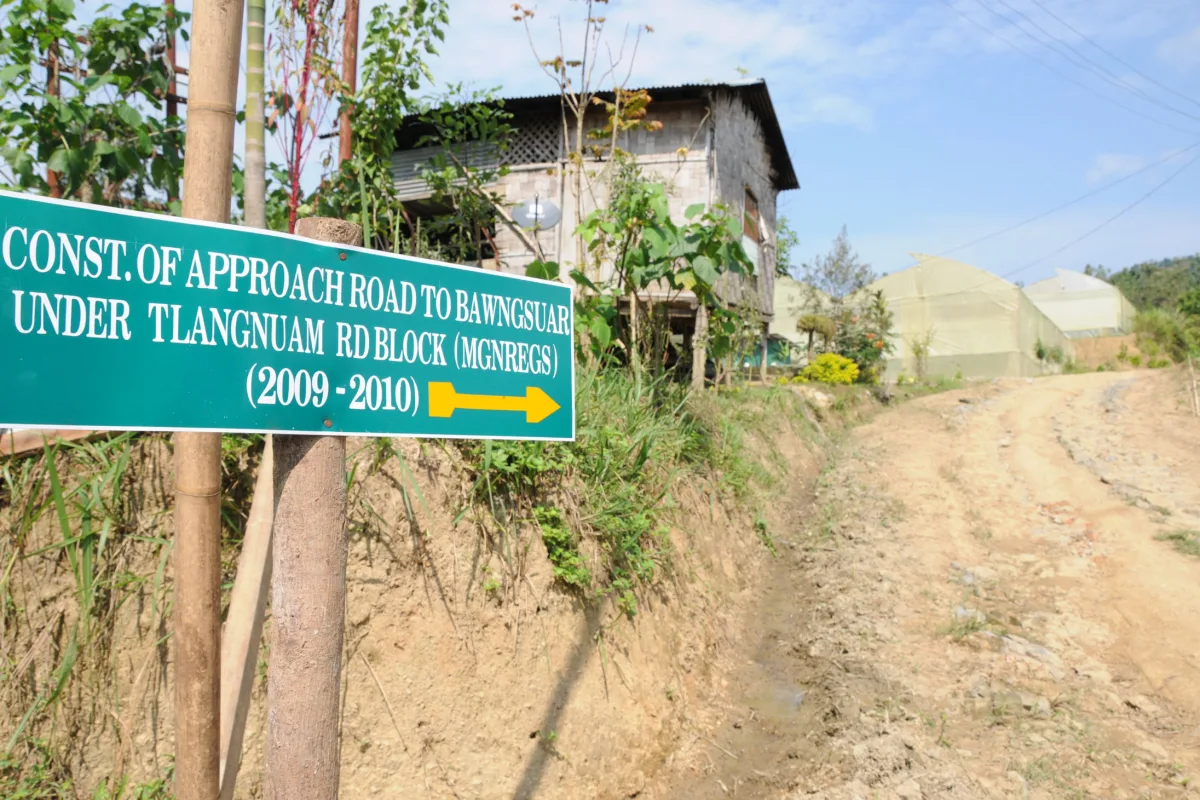
NEW DELHI: Rural households can now be given work on 375 kinds of projects under the government's new rural employment law, after the Ministry of Rural Development notified the scheme's Schedule of Permissible Works, All India Radio reported on October 6.
The list is "a 41 percent expansion over the 266 works under the previous framework", the ministry said. It is the first full list of what work can be done under the Viksit Bharat – Guarantee for Rozgar and Ajeevika Mission (Gramin), or VB-G RAM G, which replaced the Mahatma Gandhi National Rural Employment Guarantee Act this year.
The permitted works are grouped under four themes:
Works are to be chosen locally, through "a bottom-up, decentralized planning process under the Viksit Gram Panchayat Plan, approved by the Gram Sabha", the ministry said, and tracked through a national digital system, the Viksit Bharat National Rural Infrastructure Stack.
The ministry says the aim is to align "employment generation with water security, durable rural infrastructure, livelihood creation, climate resilience and inclusive development", as part of the government's goal of a developed India by 2047.
President Droupadi Murmu gave assent to the VB-G RAM G Bill on December 21, 2025, replacing the 2005 rural employment law, Onmanorama reported. The new Act took effect on July 1, 2026; until then all MGNREGA provisions stayed in force, and pending MGNREGA works were to be completed first, according to Outlook Money.
The biggest change for workers is the size of the guarantee. The new law promises 125 days of wage employment per financial year to one adult member of every rural household who volunteers for unskilled manual work, up from the 100 days guaranteed under MGNREGA. An unemployment allowance is due if work cannot be provided within the prescribed time.
Wages are to be paid directly into workers' bank or post office accounts every week, within 15 days of the muster roll closing, with compensation for delays, Outlook Money reported.
The way the scheme is paid for has changed too. The Centre now meets 60 per cent of the cost and the states 40 per cent, where MGNREGA wages were fully funded by the Centre. The central budget allocation is over ₹95,000 crore, and over ₹1,51,000 crore including the states' share, according to Outlook Money.
The law also brings changes that the new list of works will operate within, according to a summary of the Bill by PRS Legislative Research. States must announce in advance a period of up to 60 days in each financial year, covering peak agricultural seasons such as sowing and harvesting, during which no works will be taken up under the scheme.
The 60:40 cost split applies to most states, while the north-eastern and Himalayan states share costs with the Centre in a 90:10 ratio. The Centre will fix a normative allocation for each state every year, and a state must bear any spending above it. Work plans are to be integrated with the PM Gati Shakti National Master Plan, and the law provides for biometric authentication, geospatial planning and monitoring, real-time dashboards and weekly public disclosure.
A longer list of permissible works gives gram panchayats more choice in what to build with the scheme's labour, from water conservation structures and rural roads to buildings for self-help groups and farmer producer organisations, Outlook Money reported. The extreme-weather category means that work on disaster preparedness can now be planned and paid for under the scheme.
For states, which now share the cost, the schedule also sets the range of projects they will be helping to pay for.