


Land Border with India
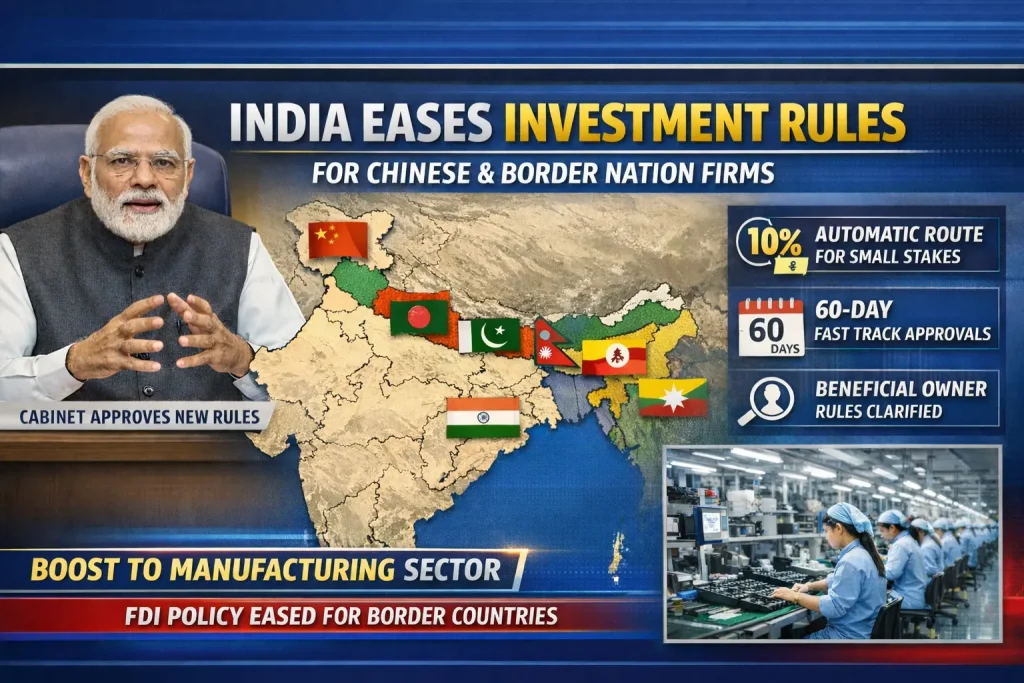
“Namaste and welcome to EEST TV. Today’s top story comes from the heart of the capital, where a landmark decision has been made that will change India’s economic relationship with its neighbors. On March 10, 2026, the Union Cabinet, led by Prime Minister Narendra Modi, approved a strategic relaxation in Foreign Direct Investment (FDI) rules. This move specifically impacts Countries sharing a land border with India, including China. After nearly six years of strict oversight, the gates are opening slightly to allow smoother capital flow into our booming manufacturing and startup sectors. Let’s look at the details of this policy shift and what it means for India’s seven land-bordering neighbors.”
The Policy Pivot: Why India is Changing the Rules
Since the pandemic began in 2020, India had placed a complete “red light” on investments from its neighbors to prevent hostile takeovers. This was known as Press Note 3. But today, the government is moving toward a “yellow light” for certain types of growth-oriented capital.
The Key Highlights of the New FDI Norms:
- The 10% Automatic Route: In a massive relief for global funds, any investor from a bordering nation who holds a non-controlling stake of up to 10% can now invest through the automatic route. This means no more waiting months for a government nod for small, passive investments.
- 60-Day Fast-Track: For bigger projects in critical manufacturing—like electronics, solar panels, and heavy machinery—the government has promised a final decision within 60 days.
- Defining the ‘Beneficial Owner’: The rules now use a clearer definition of who truly owns the money, making it easier for genuine investors to pass security checks.

Analyzing the Neighbors: Countries Sharing a Land Border with India
India’s land borders stretch over thousands of kilometers, touching seven different nations. The new FDI relaxation applies to all of them, though the impact varies by region.
China: The Largest Trade Partner
While military tensions remain, China is India’s second-largest trading partner. Indian factories rely heavily on Chinese parts. By easing FDI, the government hopes Chinese tech giants will set up factories inside India instead of just shipping goods across the border.
- E-E-A-T Insight: Industry experts suggest this “pragmatic” approach helps India’s electronics sector grow faster while still keeping the majority control in Indian hands.
Bangladesh: Boosting the East
Sharing the longest border with India, Bangladesh is a key partner in textiles and logistics. Easing investment rules will help build better warehouses and transport links along the eastern states like West Bengal and Assam.
Nepal & Bhutan: The Himalayan Partners
With open borders and deep cultural ties, Nepal and Bhutan are vital for India’s green energy goals. The new rules make it easier for collaborative hydropower and tourism projects to get funding.
Myanmar: The Gateway to ASEAN
Myanmar is our land link to Southeast Asia. Investments here are focused on infrastructure and agriculture. Clearer FDI rules will help stabilize trade in the Northeast.
Pakistan & Afghanistan: High-Security Zones
Though the policy technically covers all Countries sharing a land border with India, investments from these two nations will still face the highest level of security vetting. Sectors like Defense and Space remain strictly off-limits to them.
Economic Impact: Atmanirbhar Bharat Meets Global Capital
This move isn’t just about diplomacy; it’s about the “Make in India” mission.
- Startup Surge: Many Indian “Unicorns” were struggling to get follow-up funding because their earlier investors were from neighboring countries. This 10% rule unlocks that trapped capital.
- Tech Sovereignty: By insisting that majority control stays with Indian citizens, the government ensures that we get the technology and the money without losing our national pride.
- Global Supply Chains: India is positioning itself as the alternative to China. To do that, we need the very components and specialized capital that often come from our neighbors.
Summary: Balancing Security and Prosperity
To summarize, the government’s decision to ease FDI norms for countries sharing a land border with India is a bold step toward economic realism. It moves away from a “one-size-fits-all” ban to a more nuanced, “security-first but growth-friendly” model. By allowing small-stake investments automatically and fast-tracking manufacturing approvals, India is ensuring that its journey toward becoming a $5 trillion economy remains on the fast track. The message to the neighborhood is clear: India is open for business, provided the partnership is transparent and mutually beneficial.