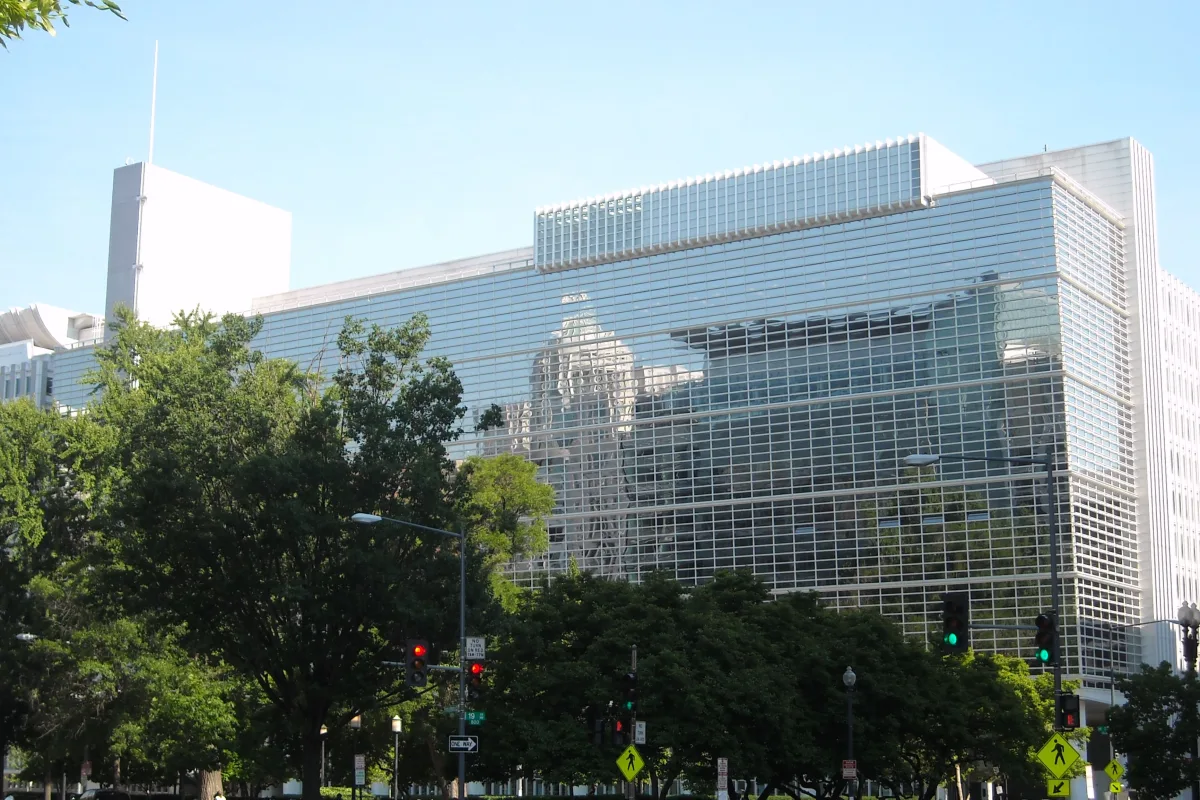
NEW DELHI: The World Bank has raised its forecast for India's economic growth in the current financial year to 7.1 per cent, from the 6.6 per cent it projected in April, All India Radio reported on October 6. The revision follows a stronger-than-expected start to the year: the economy grew 7.8 per cent in the first quarter of 2026-27, supported by private consumption and investment.
The bank said private consumption is likely to remain the main driver of growth, with stronger public investment and supportive financial and policy conditions adding to it. Exports have also done better than expected and are projected to be a key upside to the outlook, although global trade and geopolitical uncertainty may weigh on private investment.
On the supply side, the World Bank said industrial activity has exceeded expectations, with infrastructure and construction goods and electricity generation recording strong growth. The services sector continues to grow at an elevated pace, although it has moderated from last year's high base.
The weak spot is the farm sector. A rainfall deficit during the southwest monsoon has weakened agricultural prospects and may moderately affect rural demand, the bank said. The India Meteorological Department's end-of-season figures, reported on October 1, show how large that deficit was: the country received 759.4 mm of rain between June and September against a long-period average of 868.6 mm, a shortfall of 12.6 per cent. Seventeen of the 36 meteorological subdivisions, covering 42 per cent of the country, had deficient rain, and the IMD forecasts below-normal rainfall for October as well.
The World Bank is the latest of several forecasters to raise their numbers after the June-quarter data. On September 23, Fitch Ratings raised its forecast for this year to 6.9 per cent from 6.4 per cent, citing "strong first-quarter growth and the resilience of the Indian economy", and S&P Global Ratings raised its forecast to 7 per cent from 6.6 per cent, citing "robust industrial activity, healthy consumer demand, strong goods exports and accelerating government investment". The Asian Development Bank also raised its forecast to 7 per cent from 6.6 per cent, and Moody's had earlier raised its own to 7 per cent, according to a PTI report carried by ThePrint. The Reserve Bank of India itself expects growth of 6.7 per cent this year.
Both rating agencies expect growth to slow in the second half of the year. S&P said the boost from the rationalisation of the Goods and Services Tax and from income-tax cuts would gradually fade, and noted that rainfall was 15 per cent below normal at the time of its assessment. Fitch expects consumer spending growth to slow to 5.7 per cent this year from 7.2 per cent last year, and growth to ease to 6.5 per cent in 2027-28.
Prices are the other concern. S&P expects consumer inflation to average 5.1 per cent this year, and Fitch expects headline inflation to reach 5.5 per cent by December. Fitch said the Reserve Bank may raise interest rates by 25 basis points at its October policy meeting, citing strong domestic demand, rising prices and adverse supply-side developments.
In April, when the World Bank raised its forecast for this year to 6.6 per cent from 6.3 per cent, it estimated that growth had accelerated to 7.6 per cent in 2025-26 from 7.1 per cent in 2024-25, helped by strong domestic demand, export resilience, low inflation and the GST rate cuts. It also warned then that elevated global energy prices would push up prices and squeeze household incomes.
Officials welcomed the trend. Saurabh Garg, Secretary in the Ministry of Statistics and Programme Implementation, said on October 4 that strong corporate performance and continued capital investment, including by the private sector, were behind the upward revisions by agencies such as S&P Global Ratings and Fitch Ratings. He said government measures, along with steps taken by households and businesses, had helped limit the effect of the West Asia crisis and the oil price shock on the economy.
Data for the July-September quarter will show whether the momentum held through the weak monsoon and high fuel prices.