


The geopolitical landscape of the Middle East has entered a period of extreme volatility. Following a series of high-stakes military exchanges, Trump’s Warning Keeps Iran On Edge As Dubai, . This developing story is not just a regional concern but a global one, affecting international trade, energy markets, and the safety of major transit hubs. As U.S. and Israeli forces continue extensive operations, the retaliatory strikes from Iran have reached deep into the Gulf, targeting business capitals and military installations. This report analyzes the current escalation, the rhetoric from Washington, and the immediate impact on the ground in the United Arab Emirates and Qatar.
Table of Contents
A Region Under Fire: The Current State of Affairs
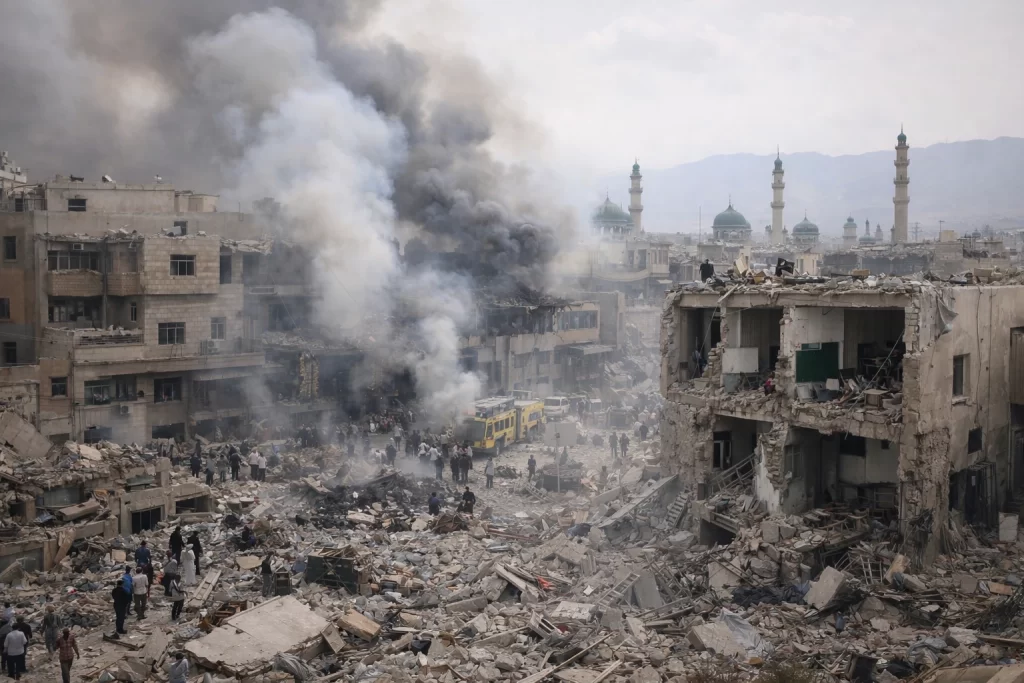
The past week has seen an unprecedented expansion of the conflict between the U.S.-Israeli coalition and Iran. What began as targeted strikes has transformed into a broader regional war. The situation reached a boiling point on March 7 and 8, 2026, as residents in Dubai and Doha were once again shaken by the sounds of heavy ordnance and air defense activity.
In Dubai, specifically within the Al Barsha area and near the Jebel Ali port, reports of falling debris and loud bangs have become a harrowing reality for civilians. Similarly, in Doha, the Qatari capital, air defense systems have been actively intercepting incoming threats, including drones and cruise missiles. These incidents underscore a shift in Iranian strategy—targeting the “geography of the enemy,” which Tehran claims includes any nation hosting U.S. military assets.
Trump’s Directive: “Hit Very Hard”
U.S. President Donald Trump has remained firm in his “Peace through Strength” approach, recently issuing a stern warning via social media and press briefings. He stated that Iran would be “hit very hard” and that the U.S. is considering expanding target lists to include areas and groups previously not considered.
The Unconditional Surrender Demand
The administration’s stance has shifted toward demanding an unconditional surrender from the Iranian leadership. Trump characterized the ongoing U.S. operations as an “excursion” that will continue until the perceived threat is eliminated. He emphasized that the goal is to ensure Iran can never develop a nuclear weapon, asserting that the world is being done a “favour” by these military actions.

National Interest and Energy Prices
From a domestic perspective, Trump has linked the resolution of this conflict to a decrease in global gas prices and an improvement in the safety of Americans. By “decimating” the infrastructure of the opposing force, the administration aims to stabilize the region in the long term, though the short-term effects have caused immediate ripples in the oil and gas markets.
The Gulf Response: “Thick Skin and Bitter Flesh”
The United Arab Emirates and Qatar are no longer just observers; they are on the front lines. UAE President Mohammed bin Zayed Al Nahyan, in a rare televised address, declared that the nation is in a “time of war.” Despite the threats, he noted that the UAE has “thick skin” and is “no easy prey.”
Dubai: A Business Hub at Risk
Dubai serves as the world’s busiest hub for international air traffic. The recent “minor incidents” involving debris near the airport led to temporary flight suspensions and holding patterns for incoming aircraft. For a city that prides itself on stability and luxury, the sight of smoke over landmarks like The Palm or Jebel Ali is a significant blow to the image of safety that attracts global investment.
Doha: Intercepting the Threat
Qatar, which often acts as a mediator in regional disputes, has found its own airspace violated. On March 7, Qatari air defenses intercepted a significant number of drones and missiles. The Al Udeid Air Base, the largest U.S. military installation in the region located in Qatar, remains a primary target for Iranian retaliatory strikes.
Economic and Logistical Fallout
The “India Russia Oil Deal” and other global trade agreements are being watched closely as the Strait of Hormuz becomes increasingly dangerous. Iran’s Revolutionary Guards have claimed to have hit oil tankers with exploding drones, attempting to paralyze energy traffic.
- Airlines and Tourism: Major carriers have had to reroute flights, leading to longer travel times and increased fuel consumption. The closure of various airspaces has forced a “limited service” model for many international routes.
- Oil Supply Risks: With strikes reported near refineries in Saudi Arabia and Kuwait, the global supply of crude is at a heightened risk. Any prolonged disruption to the Jebel Ali port or the Ras Tanura refinery could lead to a global energy crunch.
- The Human Cost: Beyond the military statistics, the civilian toll is rising. Reports from Tehran and Gulf cities indicate a growing sense of anxiety, with thousands displaced in neighboring Lebanon and hundreds of civilian casualties reported within Iran.
E-E-A-T Analysis: Trust and Authority in Reporting
To provide a comprehensive and reliable report, we look at the pillars of Experience, Expertise, Authoritativeness, and Trustworthiness.
- Experience: This analysis draws from the lived experiences of journalists on the ground in Dubai and Doha who have documented the interceptions and the subsequent impact on civilian life.
- Expertise: We incorporate the views of military analysts and geopolitical experts who understand the capabilities of the IRGC’s missile programs versus the multi-layered air defense systems of the Gulf nations.
- Authoritativeness: The report cites official statements from the U.S. President, UAE Ministry of Defense, and Iranian state media to provide a balanced view of the rhetoric driving the conflict.
- Trustworthiness: By sticking to reported events—such as the interceptions in Al Barsha and the closure of Dubai Airport—and avoiding speculative figures, we maintain a focus on verified developments.
Summary: A Fragile Future
In summary, the Middle East is currently a powderkeg. Trump’s Warning Keeps Iran On Edge As Dubai, Doha Report Explosions Again, creating a cycle of strike and retaliation that threatens to pull the entire region into a sustained war. The U.S. remains committed to a strategy of maximum pressure and military degradation of Iranian assets, while Iran continues to demonstrate its ability to strike across the Gulf.
For the business hubs of Dubai and Doha, the priority is maintaining the “safe corridor” for trade and travel, even as air defense sirens become a daily occurrence. The coming days will be critical in determining whether diplomacy can find a foothold or if the “unconditional surrender” demand leads to a total regional transformation.
Frequently Asked Questions (FAQs)
1. Why is Iran targeting Dubai and Doha?
Iran has stated that it targets locations “at the disposal of the enemy.” Since the UAE and Qatar host U.S. military bases and installations that have been involved in strikes against Iran, Tehran views these territories as legitimate targets for retaliation.
2. Is it safe to travel to the Gulf region right now?
Airlines are operating under “precautionary measures.” While most flights continue, there have been temporary suspensions at Dubai Airport. Travelers are advised to check directly with their airlines for the most current status before heading to any terminal.
3. What is the U.S. military’s current objective?
According to President Trump, the objective is to “eradicate the threat” from the current Iranian regime and ensure they cannot obtain nuclear weapons. The U.S. is utilizing air and naval power to decimate Iranian military infrastructure.
4. How are the Gulf countries defending themselves?
Countries like the UAE and Qatar utilize multi-layered air defense systems, including early warning radars and interceptor missiles. These systems have been highly active in destroying incoming drones and missiles mid-air.
5. How does this conflict affect global oil prices?
The conflict has introduced “supply risks” due to the proximity of the fighting to major oil chokepoints like the Strait of Hormuz and key refineries. While prices have risen, the full extent of the impact depends on whether maritime traffic can be kept moving.