

Reporter: ESST TV International Desk
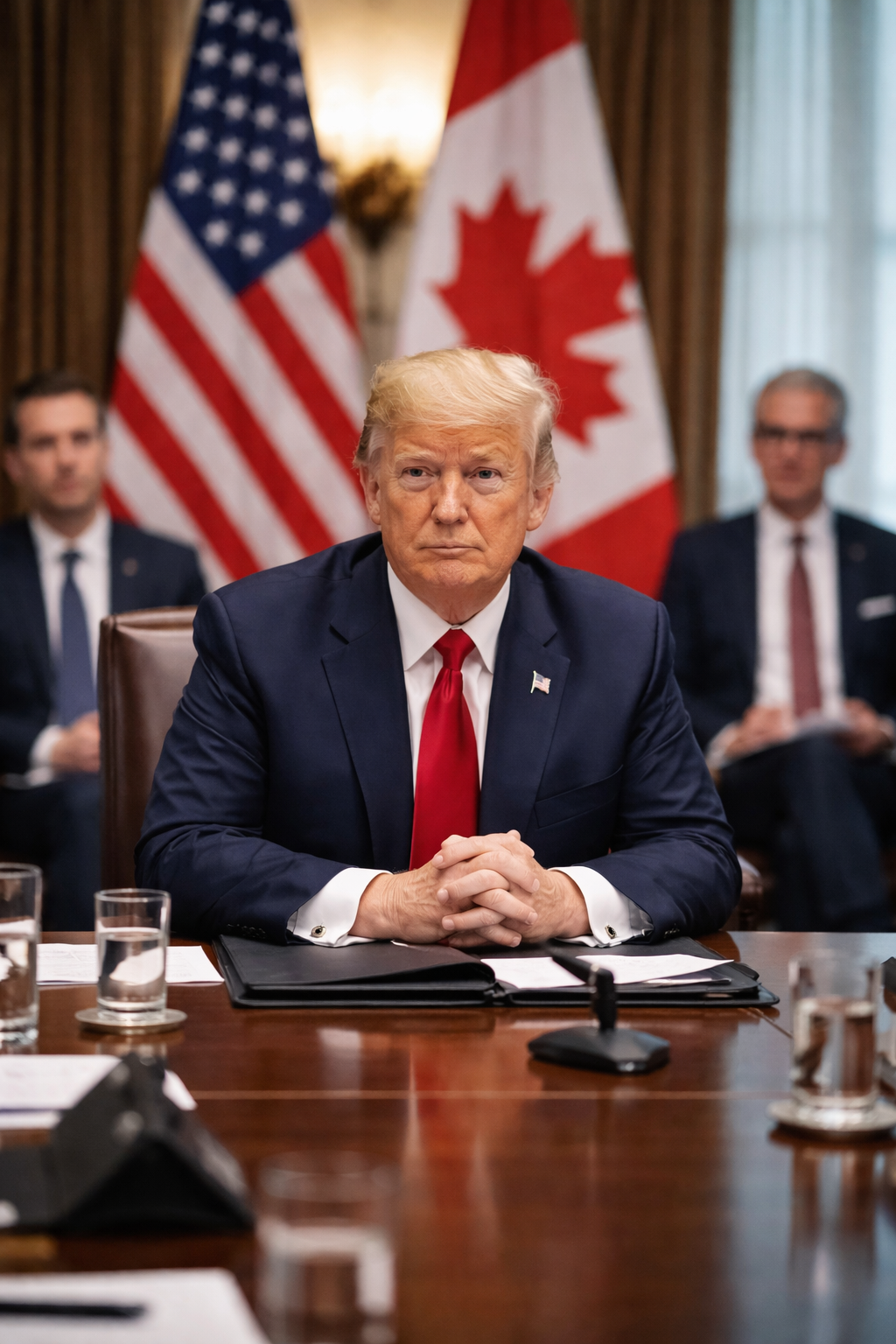
In a move that has stirred diplomatic discussions across North America, former U.S. President Donald Trump has reportedly revoked Canada’s invitation to join the Board of Peace, a global policy forum he initiated to promote international dialogue and cooperation among major allies. The decision has raised eyebrows in both Washington and Ottawa, with experts calling it a setback for U.S.–Canada relations
🇺🇸 What Is the “Board of Peace”?
The “Board of Peace” was introduced earlier this year as part of Trump’s renewed diplomatic initiative to create a high-level council focused on conflict resolution, defense cooperation, and economic stability. The board was envisioned to include strategic partners such as the United Kingdom, Japan, India, and Canada.
The inclusion of Canada was seen as a natural step, given the two nations’ shared history and cooperation through NATO and other international bodies. However, recent policy disagreements between Washington and Ottawa seem to have changed the tone.
Why the Invitation Was Revoked
Sources close to Trump’s team told ESST TV that the decision came after a series of disagreements over trade, border security, and defense spending. Trump reportedly expressed frustration with what he called Canada’s “uncooperative stance” in recent talks on defense cost-sharing and its reluctance to align with U.S. positions on certain global conflicts.
An insider familiar with the development said,
“President Trump wanted unity and swift decision-making within the Board of Peace. He felt that Canada’s leadership wasn’t aligned with his vision and preferred to work with countries that shared a more direct approach.”
🇨🇦 Canada Responds Calmly
The Canadian government has so far maintained a restrained response, emphasizing its commitment to peace, diplomacy, and global stability. A spokesperson from Canada’s foreign ministry stated,
“Canada remains dedicated to international cooperation and will continue to support peaceful dialogue and development worldwide, regardless of changes in U.S. leadership initiatives.”
Political observers in Ottawa believe that the Trudeau administration is unlikely to escalate tensions, especially as it balances trade and security relations with its southern neighbor.
Experts Weigh In
International policy experts have described the move as symbolic rather than structural, noting that the Board of Peace is still in its early stages and has not yet developed formal policy powers. However, they say Trump’s action sends a message about how he intends to deal with allies if he returns to office — prioritizing loyalty and alignment over traditional diplomacy.
Dr. Susan Raymond, a foreign policy analyst, told ESST TV,
“This decision is more about political signaling than diplomacy. Trump is showing that he wants quick consensus under his leadership, not lengthy debates.”
What This Means for U.S.–Canada Relations
The two countries have one of the world’s strongest bilateral relationships, but the latest move adds a new layer of strain. While trade between the two remains robust, issues around energy policy, border management, and defense funding have increasingly caused friction.
Analysts believe the diplomatic chill may be temporary, but it highlights how differently the two governments view global cooperation Canada through consensus and diplomacy, Trump through assertive leadership.
Looking Ahead
Despite the setback, both Washington and Ottawa are expected to keep communication channels open. Canada continues to play an active role in global peacekeeping and humanitarian missions, while the U.S. administration under Trump’s influence is pursuing a more assertive, results-driven foreign policy.
The revocation may not derail relations entirely, but it clearly marks a shift in tone signaling that Trump’s future international alliances will be based less on tradition and more on alignment with his personal vision of global peace and power balance.
The revocation may not derail relations entirely, but it clearly marks a shift in tone signaling that Trump’s future international alliances will be based less on tradition and more on alignment with his personal vision of global peace and power balance.
Reported by ESST TV