
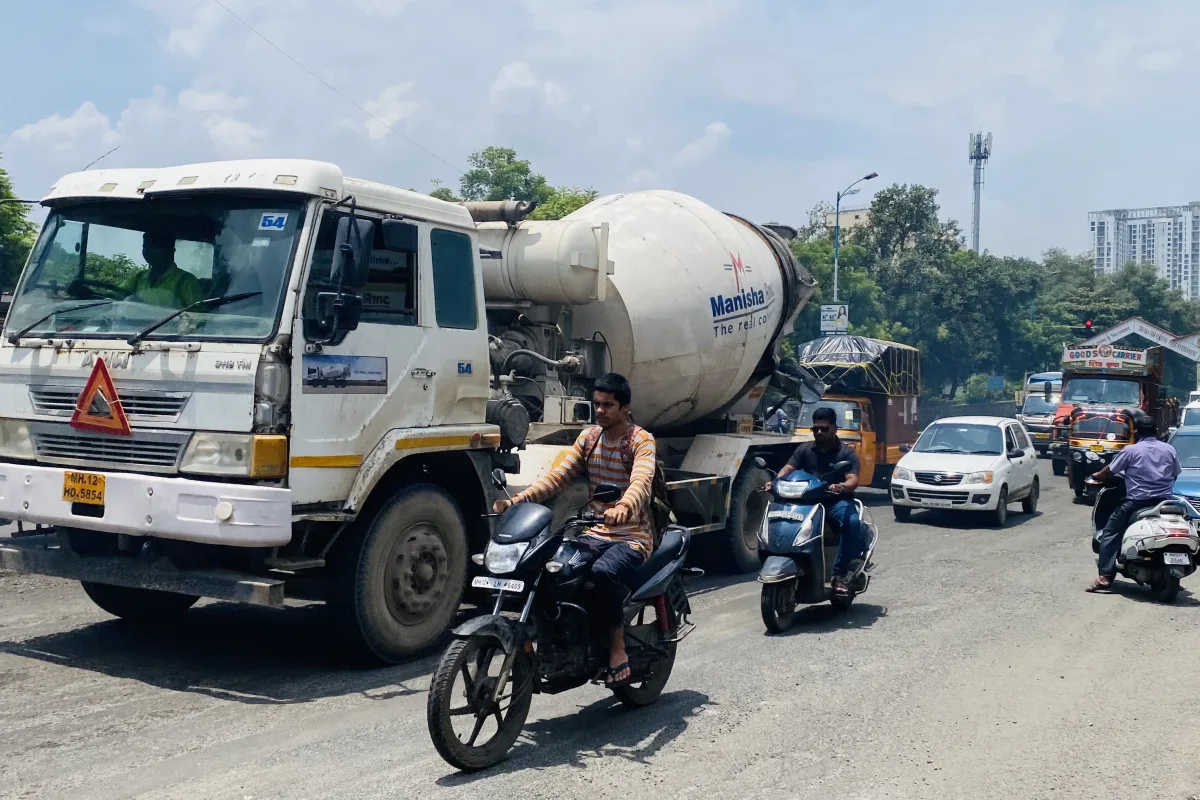
NEW DELHI: Two-wheelers are the main way Indians get to work, carrying 42.6 per cent of workers who commute to a fixed workplace, according to the country's first all-India household travel survey, released by the National Statistics Office.
The survey covered about 4.92 lakh households and more than 20.34 lakh people in 14,274 villages and 10,377 urban blocks between July 2025 and June 2026, All India Radio reported on October 5. It was meant to "generate robust, data-driven insights into domestic travel patterns and dynamics to support regional transport planning, infrastructure development and evidence-based policy formulation", the Ministry of Statistics and Programme Implementation said.
What commuting costs
The average worker spends ₹785 a month getting to a fixed workplace. The gap between town and village is wide: urban workers spend ₹1,044 a month, against ₹612 for rural workers.
For longer journeys, public transport dominates. Buses and trains carry 73.5 per cent of overnight travel, followed by cars at 15.1 per cent and two-wheelers at 8.8 per cent, the survey found.
Why Indians travel overnight
A companion survey from the same round of fieldwork, the Domestic Tourism Expenditure Survey, released in late September, looks at why people travel and what they spend. Conducted as part of the 80th round of the National Sample Survey, it covered 2,46,113 households in 24,778 first-stage units, 14,371 rural and 10,407 urban, Organiser reported.
Pilgrimage and religious travel is the biggest reason for overnight trips, at 48 per cent, in both villages and towns, Organiser reported from the survey. In rural areas, health and medical trips are the second-largest category, at 38.4 per cent; in urban areas, holidays and leisure come second, at 36.4 per cent. About 80 per cent of trips lasted five days or less, and the average trip involved 2.03 travellers.
Medical journeys are the most expensive. Over the survey's one-year recall period, households spent on average ₹29,454 on a medical trip in rural areas and ₹41,649 in urban areas, both surveys' reports agree. Among shorter trips recalled over 30 days, business travel cost the most: ₹5,179 for rural households and ₹6,934 for urban ones, The Policy Edge reported.
More trips than a decade ago
Indians are travelling more than in the last comparable survey, in 2014–15. Rural households made 127 overnight trips per 100 households, up from 118; urban households made 132, up from 121. Same-day trips have grown faster: 65.1 per cent of rural households and 46.2 per cent of urban households made at least one in the previous 30 days, compared with 57.1 per cent and 40.6 per cent in 2014–15.
How people stay and travel differs by place. Twenty-eight per cent of rural trips used non-commercial lodging such as a family's own holiday home or employer housing, while 36 per cent of urban travellers stayed in hotels or guesthouses, Organiser reported. Rural travellers most often take the bus (32 per cent) and urban travellers the train (35 per cent).
Holidays remain largely an urban habit. Rural families made four holiday trips per 100 households, down from five in 2014–15, while urban families made 13.5, up from 12.7, according to figures reported by the Indian Express. About 35.2 per cent of rural households and 37.7 per cent of urban households took at least one overnight trip. Families from Tamil Nadu accounted for nearly a quarter of all overnight holiday trips made by Indians.
Uttar Pradesh is the most visited state, receiving 15.7 per cent of overnight trips, followed by Tamil Nadu (13.4 per cent) and Rajasthan (8.0 per cent).
The figures give planners their first national picture of everyday travel, from the cost of a daily commute to the long, expensive journeys families make for medical care.
0 comments
No comments yet. Comments are read by our team before they appear.