
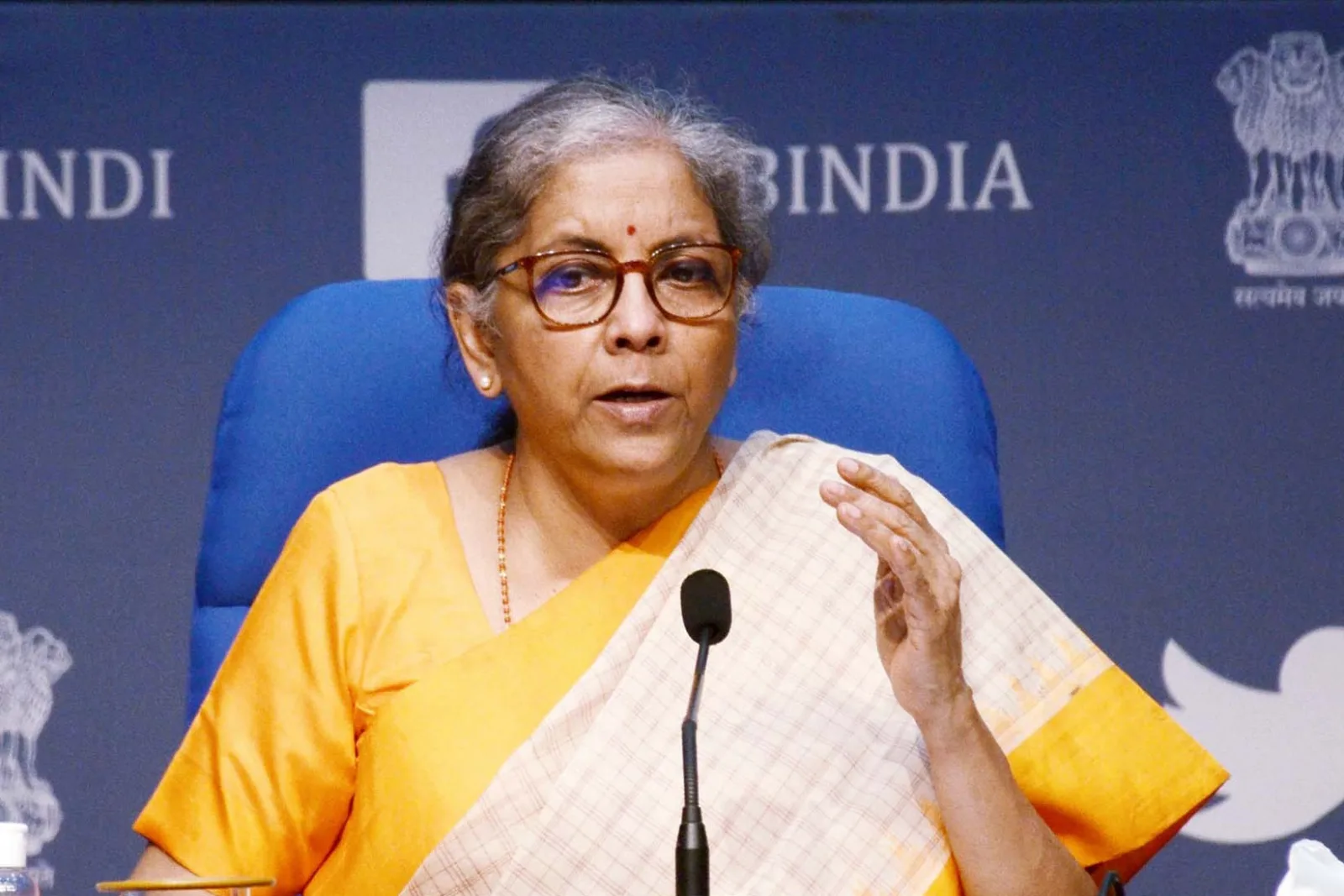
NEW DELHI: India's economic strength and resilience were built over the past decade through fiscal prudence, infrastructure investment, banking reform, better delivery of government schemes and consistent reforms, Finance Minister Nirmala Sitharaman said on October 3.
Addressing the fifth Kautilya Economic Conclave in New Delhi, Sitharaman said India had navigated the shocks of the past four years with its fundamentals intact, citing real GDP growth of 7.8 per cent in the first quarter of 2026-27, All India Radio reported. The government, she said, had advanced national frameworks through the Goods and Services Tax, the Insolvency and Bankruptcy Code and the four labour codes.
Debt against the global trend
Sitharaman said the International Monetary Fund projects India's general government debt, which covers the Centre and the states together, to decline from 83.4 per cent of GDP in 2026 to 77.7 per cent in 2031, against a rising global trend.
The Centre has its own, narrower target. In August, she said the government aimed to bring its debt down to 55.6 per cent of GDP in 2026-27, from 56.1 per cent in 2025-26, and to 50 per cent by March 2031, according to a PTI report carried by ThePrint. The fiscal deficit for 2026-27 is projected at 4.3 per cent of GDP, or ₹16.96 lakh crore. Borrowing should go into creating assets, she said then, and states must not leave unsustainable debt to future generations.
Roads, airports and loans
On infrastructure, Sitharaman said capital expenditure for this financial year had been budgeted at ₹12.22 lakh crore. The national highway network had expanded by about 61 per cent and the number of operational airports had more than doubled since 2014, she said.
The government's capital spending, she argued in August, has drawn private investment along with it: capex has risen from ₹3.39 lakh crore in 2019-20. "It's the public expenditure that we kept undertaking all these years... has actually helped the private sector come forward. They are now taking risks and investing," she said then.
She also cited the welfare and credit schemes that, she said, had strengthened citizens' capacity to take part in growth: more than 52 crore collateral-free loans sanctioned under the PM MUDRA Yojana, along with the PM Awas Yojana for housing, the PM Ujjwala Yojana for cooking gas, the Ayushman Bharat health insurance scheme and the PM Garib Kalyan Anna Yojana for free food grains.
The setting
Sitharaman gave the special address at a plenary titled "Resilience in an Age of Flux: India's Economic Priorities", which looked at sustaining growth, keeping macroeconomic stability and expanding investment amid global fragmentation, technological disruption and recurring shocks, DD India reported. The discussant was Amélie de Montchalin, president of France's Cour des comptes and a former minister.
The conclave, organised by the Institute of Economic Growth with the Finance Ministry, ran from October 3 to 5 and was opened by Vice President C.P. Radhakrishnan. The programme also listed addresses by RBI Governor Sanjay Malhotra, Shaktikanta Das, Principal Secretary-2 to the Prime Minister, Communications Minister Jyotiraditya Scindia and External Affairs Minister S. Jaishankar, who was to give the concluding address.
The speech came at a difficult moment for the external economy. In the two weeks to September 25, India's foreign exchange reserves fell by $33.2 billion as the Reserve Bank sold dollars to support the rupee, and foreign investors pulled a net ₹35,861 crore from Indian shares in September, according to official data reported by All India Radio. Sitharaman's argument was that India's fundamentals had stayed intact through the shocks of the past four years.
0 comments
No comments yet. Comments are read by our team before they appear.