
STOCKHOLM: The 2026 Nobel Prize in Physiology or Medicine has been awarded to Karl Deisseroth of the United States and Peter Hegemann and Georg Nagel of Germany for the discoveries that led to optogenetics, a technique that uses light to switch individual nerve cells on or off in a living brain.
The Nobel Assembly at Sweden's Karolinska Institute announced the prize on October 5. STAT reported the citation as "for their discoveries concerning light-gated ion channels and optogenetics"; Al Jazeera reported that the three were honoured "for their discovery of a molecular switch for nerve cells".
"Optogenetics has fundamentally altered our understanding of the brain. Every day brings new discoveries, helping to solve one of humanity's great mysteries: how our incredible brain works," the Nobel Assembly said. "Optogenetics provides opportunities for mapping the brain in a way that we could once only dream of," said Per Svenningsson, chair of the Nobel Committee.
From a swimming alga to the brain
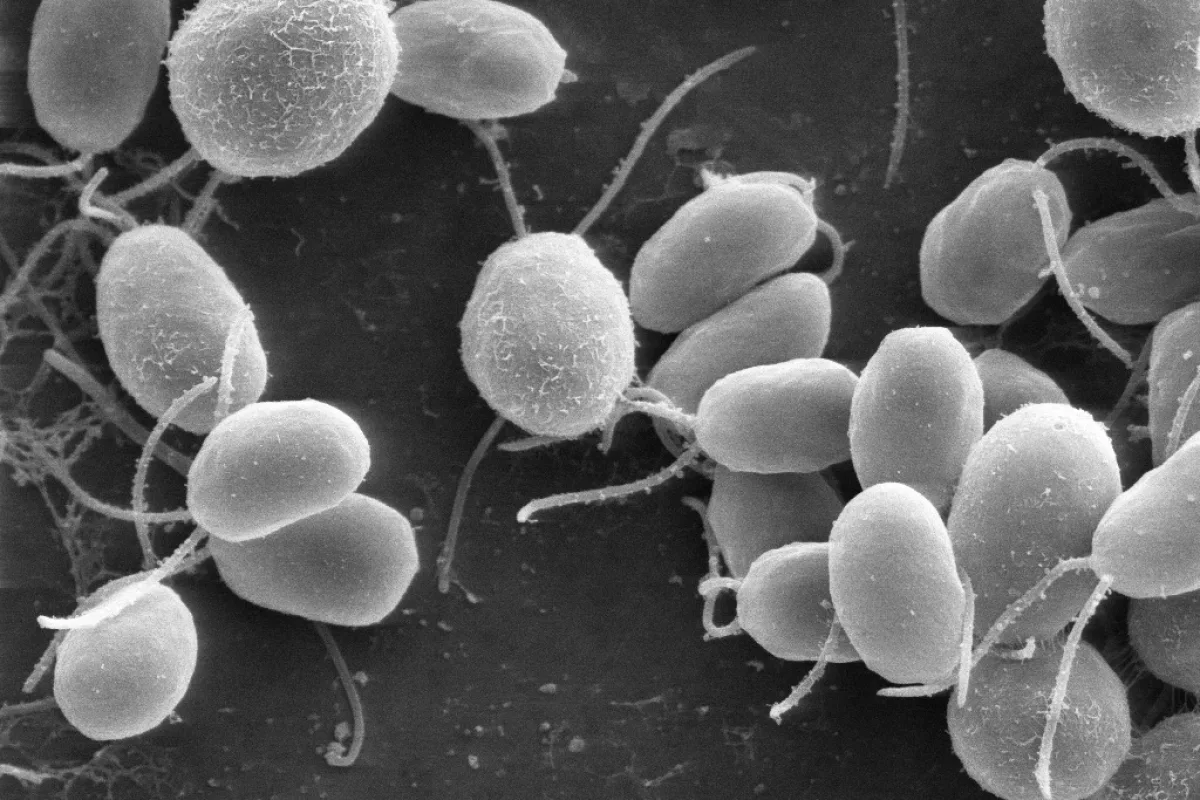
The work began in the early 1990s at the Max Planck Institute, where Hegemann was studying how a single-celled green alga, Chlamydomonas, swims towards light, STAT reported. With Nagel, he identified channelrhodopsin, a light-sensitive ion channel in the cell membrane that opens rapidly when light falls on it, and they showed that the protein worked in any cell they put it into. Hegemann's laboratory first identified channelrhodopsin-1, and Nagel's team channelrhodopsin-2, according to Genetic Engineering and Biotechnology News.
Deisseroth took the next step. His team inserted the gene for channelrhodopsin into rat nerve cells, so that flashes of blue light could trigger nerve signals in the living brain. The landmark 2005 paper, published in Nature Neuroscience, showed "precise, millisecond-timescale control of action potentials using flashes of blue light", GEN reported.
"We're not using light to collect information, we're using light to cause things to happen... it's using light to turn cells on or off with that millisecond precision and the cellular resolution that is essential to brain function," Deisseroth told STAT.
What it is used for
Optogenetics lets researchers find out which cells do what and how they are connected. It is used to study how specific cell types contribute to learning, fear, addiction and movement, Al Jazeera reported. "This method is now being used in laboratories around the world to reveal the brain's mysteries," said Thomas Perlmann, secretary-general of the Nobel Assembly.
It is also moving towards the clinic. Researchers hope it could improve cochlear implants by stimulating the auditory nerve more precisely than electrical devices, and it is being tried in retinal treatments for retinitis pigmentosa, where viral vectors are used to make surviving cells in the retina sensitive to light again.
The laureates
Deisseroth is a professor at Stanford University and the Howard Hughes Medical Institute. Hegemann is a professor at Humboldt University in Berlin, and Nagel a professor of biophysics at the University of Würzburg. Al Jazeera gave their ages as 54, 71 and 73; STAT as 55, 72 and 73. They will share 12 million Swedish kronor, about $1.2 million.
"All three said the same thing: that they thought it was absolutely wonderful to receive the prize with the other two who they call their friends," Perlmann said.
Who was left out
The prize can be shared by at most three people, and several others contributed. STAT noted that researchers on social media said Ed Boyden, first author of the 2005 paper and now at MIT, should have been included; he did not respond to STAT. The Nobel committee's background material mentioned Gero Miesenböck, who first made non-photoreceptive neurons sensitive to light in 2002, and Zhuo-Hua Pan of Wayne State University, who used channelrhodopsin in retinal ganglion cells in 2004. The committee chair declined to comment on the choice.
"We have so many collaborators, colleagues, and students and postdoctoral fellows in the lab over the years... It's been a very broad community," Deisseroth said.
The prizes will be presented in Stockholm on December 10.
0 comments
No comments yet. Comments are read by our team before they appear.