

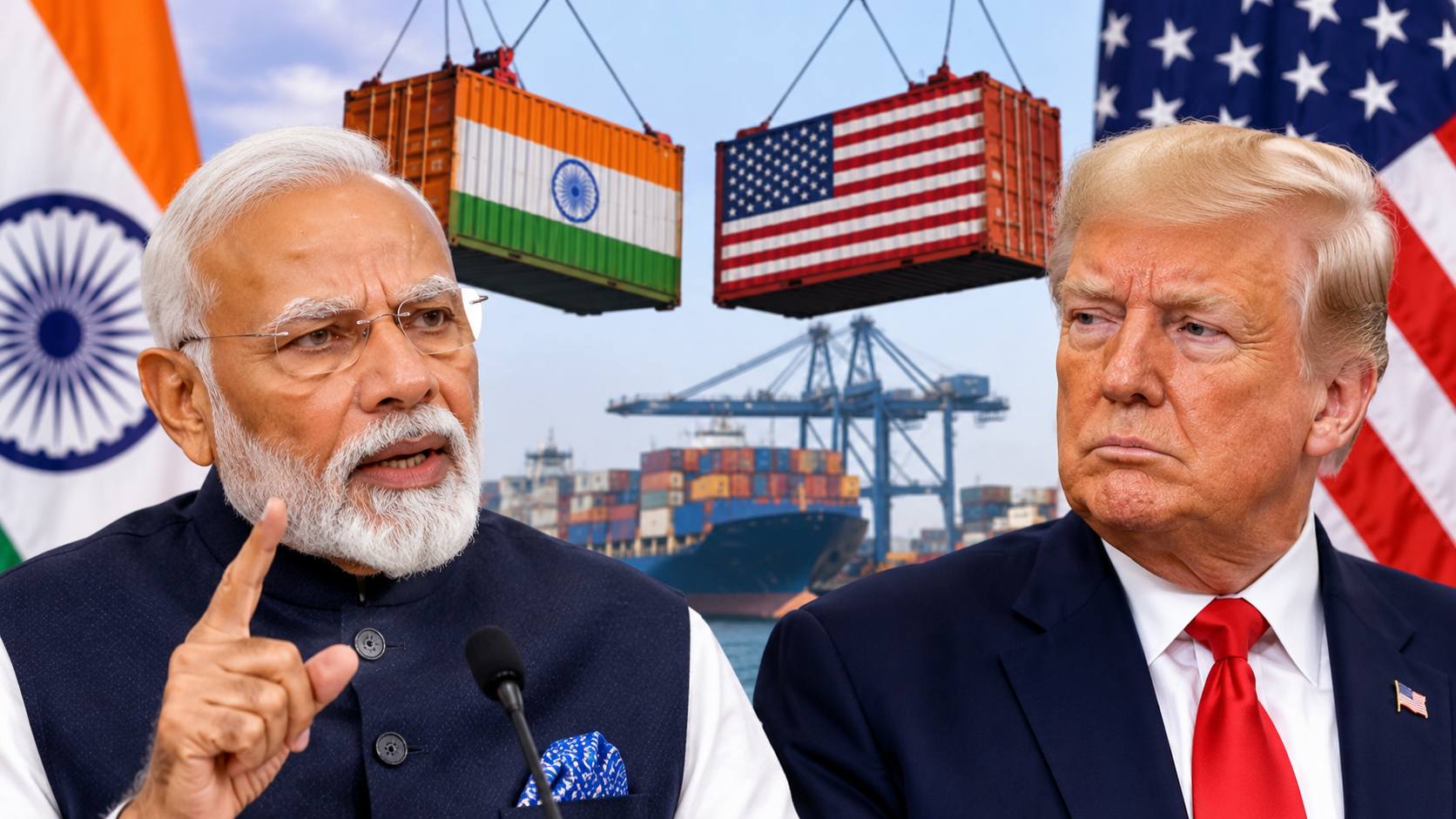
On the US tariff on India, New Delhi has pushed back firmly. India's Commerce Ministry has rejected US claims that India has "structural excess capacity" in its manufacturing sectors, after Washington proposed additional tariffs of up to 25 per cent on Indian goods. India said it remains committed to an early trade deal with the US, as reported by Swarajya.
The proposal follows a US investigation into 14 economies, including India.
US tariff on India: key facts↑
- What the US proposed: Additional tariffs of up to 25 per cent on Indian goods
- Possible lower rate: 17 per cent, if India and the US conclude a reciprocal trade deal
- Why: A US probe under Section 301 into alleged "structural excess capacity" in manufacturing
- Countries covered by the probe: 14 economies, including India
- India's response: India does not have structural excess capacity in any sector
- Status: The proposal is open for public comments; India is examining the US notice
What did the US say?↑
The Office of the United States Trade Representative (USTR) issued its findings in investigations under Section 301 of US trade law. These looked into whether 14 economies were producing far more goods than they need, and selling the extra cheaply abroad.
According to Swarajya, the USTR raised concerns about India's industrial policies, labour protections, "financial repression", market access restrictions and what it sees as weak steps to tackle global excess manufacturing capacity. Based on these findings, it proposed extra tariffs of up to 25 per cent on Indian goods, which could be cut to 17 per cent if the two countries sign a reciprocal trade deal.
What did India say?↑
In a statement issued late on Wednesday, November 25, the Ministry of Commerce and Industry said:
- India engaged constructively throughout the US investigation.
- India has consistently said it has no structural excess capacity in any sector.
- It made this clear in its response to the US notice and in later hearings.
- Any trade concerns should be dealt with within the ongoing trade talks.
- India remains committed to an early conclusion of the bilateral trade agreement.
The ministry also said it was examining the USTR's notice, according to the Free Press Journal.
What is "structural excess capacity"?↑
In simple words, structural excess capacity means a country's factories produce much more than its own people can buy, often with government support. The extra goods are then sold abroad at low prices, which can hurt factories in other countries.
The US has raised this concern about several large manufacturing economies. India has rejected the charge in its own case.
What is Section 301?↑
Section 301 is part of the US Trade Act of 1974. It allows the USTR to investigate trade practices of other countries that it considers unfair, and to take action, including putting tariffs on their goods.
Where do India-US trade talks stand?↑
India and the US announced a bilateral trade agreement on February 2, 2026, which is guided by a Joint Statement issued on February 7, 2026, according to Swarajya. Negotiations on the details are still going on.
India's position is that the trade talks are the right place to solve such issues, rather than new tariffs.
Trade ties have seen ups and downs. In 2025, the US imposed steep tariffs on many Indian goods, including an extra 25 per cent linked to India's purchase of Russian oil, as reported by The Tribune at the time.
What do experts say?↑
The Global Trade Research Initiative (GTRI), a Delhi-based think tank, said the Section 301 probes bring back the earlier "reciprocal tariff" approach under a new name. It argued that the aim is to push trading partners into one-sided and costly trade deals, rather than to deal with real overproduction, Swarajya reported.
What it means for Indian businesses↑
If the tariffs are imposed, Indian exporters selling to the US could face higher costs, which may make their goods less competitive. Labour-heavy sectors such as textiles, gems and jewellery, shrimp and carpets, which were among the hardest hit by US tariffs in 2025, would be watching closely.
For now, nothing has changed at the border. The proposal is still open for comments, and a trade deal could reduce the rate. India is also building closer trade ties with other regions. Read our report on the ASEAN-India Summit. For how prices at home are moving, read our report on retail inflation in October.
FAQ
Q1. What tariff has the US proposed on India? Additional tariffs of up to 25 per cent on Indian goods, which could fall to 17 per cent if a reciprocal trade deal is signed.
Q2. Why has the US proposed this tariff? Its Section 301 probe alleged "structural excess capacity" in manufacturing in 14 economies, including India.
Q3. What did India say? India said it has no structural excess capacity in any sector and that trade concerns should be handled within the ongoing trade talks.
Q4. Have the new tariffs come into force? No. They are only proposed and are open for public comments.
Q5. Is there an India-US trade deal? A bilateral trade agreement was announced on February 2, 2026, and negotiations are ongoing.




0 comments
No comments yet. Comments are read by our team before they appear.